Ancestors · Ritual
Pitru Dosh Remedies: The Ancestor Diya Ritual, Step by Step
By LumenOracle Editors · 10/19/2026 · 2 min read · Ancestors & Traditions
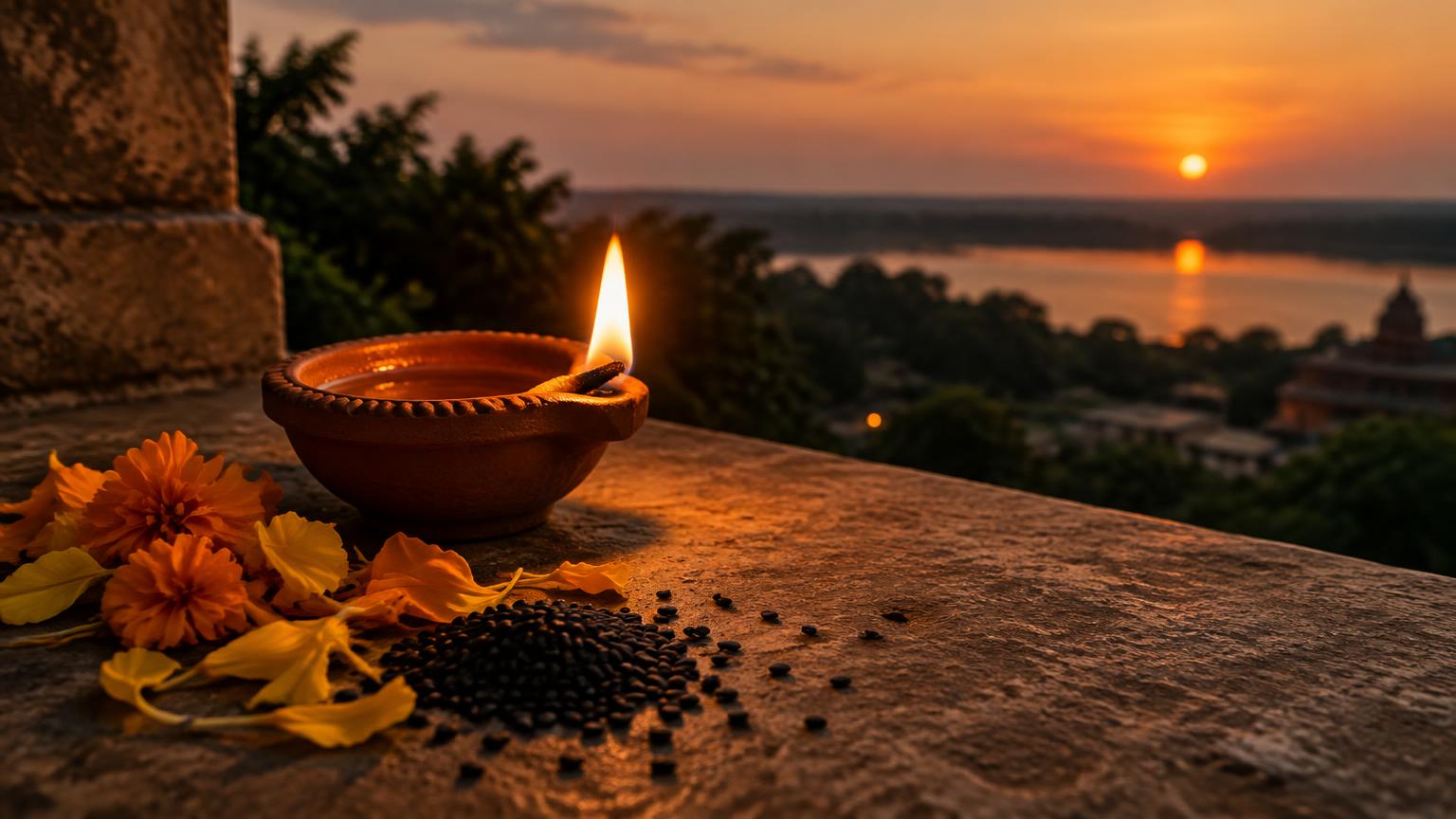
How families traditionally light a south-facing diya on Amavasya to remember ancestors — with honest notes on what the ritual can and cannot do.
What is Pitru Dosh?
Pitru Dosh is a religious idea from Vedic astrology. It describes a belief that unresolved duties toward ancestors (pitru) can show up as obstacles in a family. It is a matter of faith, not proven science — it is not an established cause of money problems, quarrels or bad luck.
Many families still find deep meaning in the rituals linked to it. Done with care, they become a beautiful practice of gratitude and remembrance.
The south-facing diya
In Hindu tradition the south is linked with the ancestors and Yama. A simple clay diya is lit facing south, usually:
- on Amavasya (new moon), or
- on a Sunday evening, or
- during Pitru Paksha, the fortnight dedicated to ancestors.
Step by step
- Clean a safe, steady spot — a stone ledge or a metal plate on the floor.
- Fill a clay diya with ghee or sesame oil and add a cotton wick.
- Some families place a few black sesame seeds (til) beside it as a symbol of offering.
- Light it facing south and say the names of your ancestors, or simply "thank you".
- Sit quietly for a few minutes. Remember one good thing each person gave the family.
- Let the diya burn out safely, or put it out with a snuffer — never leave it unattended.
Treat the lamp as a symbol of respect, not a guaranteed fix.
Food giving and kindness
Tradition pairs the lamp with annadaan (giving food):
- Feed people in need, according to your means.
- Offer birds safe grain and fresh water.
- If you feed a cow, give suitable food — not leftovers, plastic or spoiled items.
Reading the flame
If you watch the flame, our explains both the symbolic reading and the physical cause — a flicker is often just a draft.
The most important part
If your family faces money trouble, repeated arguments or failures, don't blame it only on Pitru Dosh. Financial planning, honest conversation, stress care and working on real causes help most. The ritual can sit beside these as a source of calm.
Questions & answers
Which day is best for the ancestor diya?
Traditionally Amavasya (new moon), Sundays, or the days of Pitru Paksha. Any calm evening with sincere remembrance is meaningful.
Will lighting a diya remove Pitru Dosh?
There is no scientific evidence that it removes Pitru Dosh or ends money problems. Many people find it brings peace and a sense of connection.
Ghee or sesame oil?
Both are traditional. Ghee is common for devotion; sesame oil is often linked with ancestor rites.
#pitru dosh#diya#amavasya#ancestors#pitru paksha