Ancestors · Buddhism
Remembering Ancestors in Buddhism: Candles and Merit Sharing
By LumenOracle Editors · 10/19/2026 · 1 min read · Ancestors & Traditions
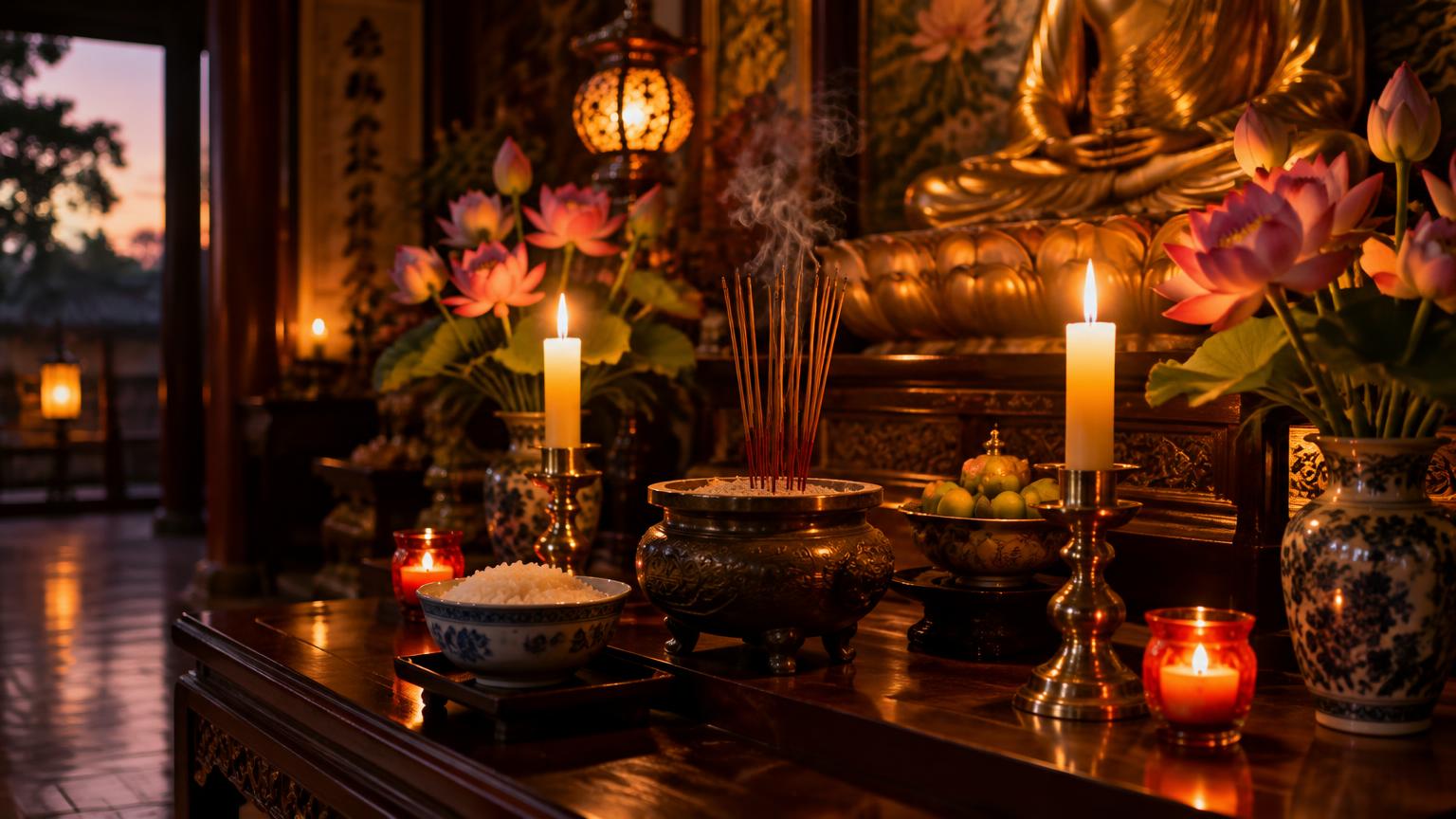
How Buddhists honour the departed with candles, food offerings and punya-daan (sharing merit) — a gentle practice of gratitude.
A different view of ancestors
The Buddha's teaching (Dhamma) does not speak of a "dosh" or curse from ancestors. Instead it offers a gentle practice: remembering the departed and sharing merit (pattidāna / punya-daan) with them.
Merit sharing, step by step
- Do a good deed — give food to monks or people in need, support a school, or help someone.
- Light a candle and incense at a home shrine or temple. The candle is a symbol of wisdom dispelling darkness.
- Recite or reflect: "May this merit be shared with my departed relatives. May they be well and happy."
- Pour water from one vessel into another (a Theravada custom) as a sign of sharing.
- Sit in mettā (loving-kindness) meditation for a few minutes.
Traditions across Asia
- Sri Lanka & Thailand — merit-making after funerals and on anniversaries.
- Ullambana / Obon (East Asia) — lanterns and offerings for ancestors.
- India's Ambedkarite Buddhists — remembrance with candles, Buddha Vandana and dāna.
The heart of the practice is kindness now — not fear of the past.
Light your candle safely and never leave it unattended. Learn more in our .
Questions & answers
Do Buddhists believe in Pitru Dosh?
Pitru Dosh is a Vedic astrology idea. Buddhist teaching instead encourages remembering the departed and sharing merit through good deeds.
What can I offer?
Food to those in need or to monks, candles, flowers, incense — and above all kind actions.
#buddhism#ancestors#merit sharing#punya daan#dhamma