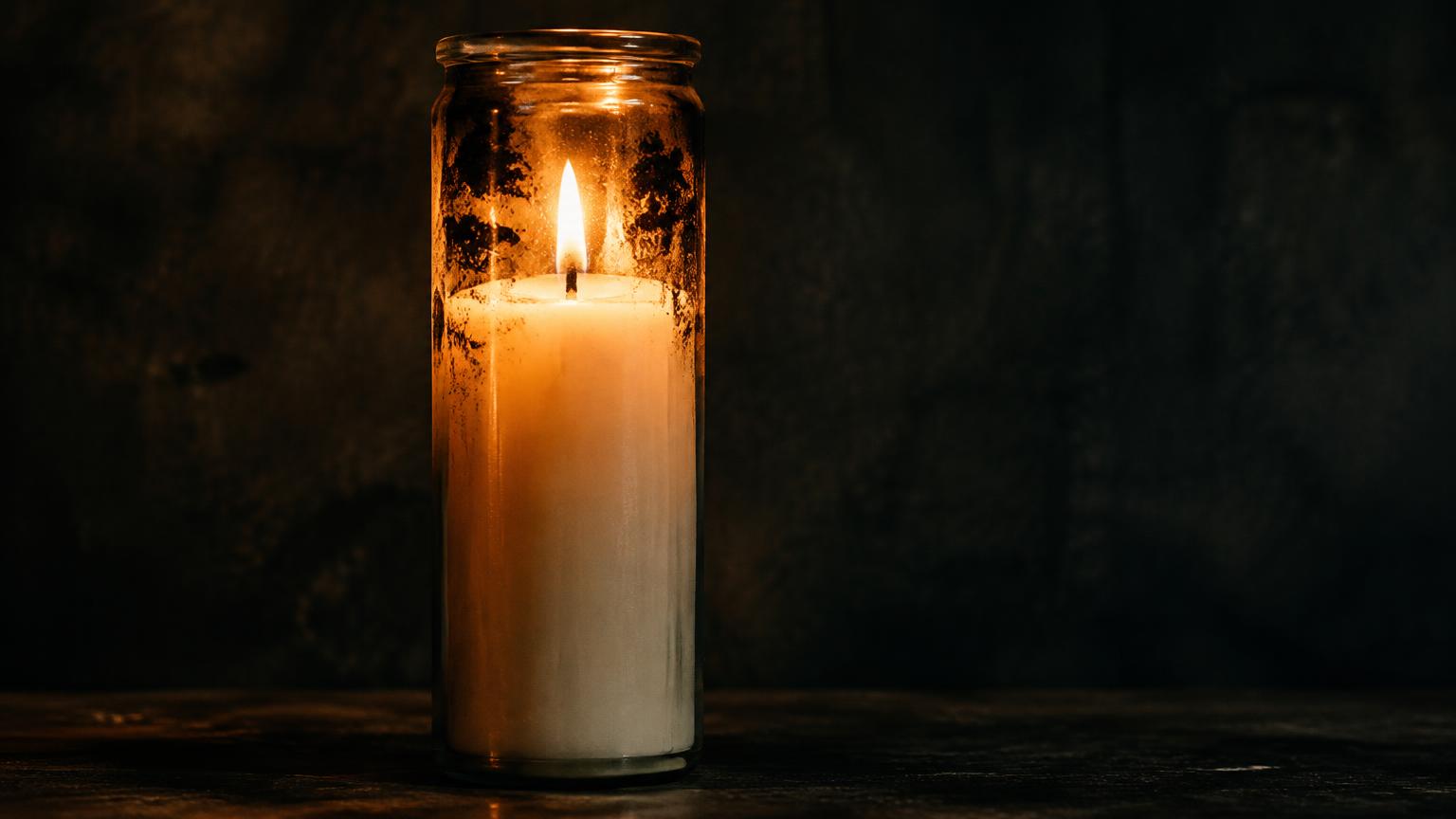
Reading glass-encased veladoras and novenas: soot patterns, clear glass, and when a jar cracks.
Jar candles are tall, glass-encased candles known as veladoras, novenas or seven-day candles. They're central to Latin American devotional practice, Catholic votive tradition and Hoodoo rootwork. Because the flame burns inside glass for days, readers interpret what it leaves on the glass as much as the flame itself.
Common signs
- Clean, clear glass: often read as a smooth, unobstructed working.
- Black soot at the top that clears as the candle burns: early resistance that resolves.
- Heavy soot throughout: obstacles or strong opposition, depending on tradition.
- White haze: often read as spiritual presence or a slow outcome.
- Cracked glass: traditionally a strong sign. Physically, it means the glass got too hot, which is a real safety hazard.
Physical causes
Soot comes from incomplete combustion. Long wicks, additives, herbs or oils added to the top, and poor airflow all make soot. Glass cracks from thermal stress, a flame touching the glass, or a manufacturing flaw. Reverence for the jar's tradition and practical safety go together.
Complete reading, start to end
Follow all three stages in order. The middle stage is specific to this type of reading.
Stage 1 · Before you light
- 01Choose a quiet time when you can stay with the candle for the whole burn.
- 02Clear a stable, heat-proof surface away from curtains, shelves, pets, children and drafts.
- 03Gather what you need: candle, holder or dish, lighter, snuffer, water nearby, and a notebook or phone.
- 04Trim the wick to about 5 mm and wipe away dust or loose wax.
- 05If you dress the candle, use only skin-safe, diluted oils and a light touch of dried herbs.
- 06Ground yourself with a few slow breaths and notice how you feel right now.
- 07Write your intention or question in one clear sentence.
Stage 2 · During the reading
- 08Place the jar in a sink, a metal tray or a fire-safe container.
- 09Trim the wick and add only small amounts of herbs or oil, if any.
- 10Light and check on it regularly; extinguish it whenever you leave the home.
- 11Relight to continue the burn; note changes to the glass each day.
- 12Read the glass after the final burn, once it's cool.
Stage 3 · Closing and reflecting
- 13Extinguish the flame with a snuffer or by dipping the wick, not by blowing, if your tradition prefers.
- 14Let the candle and any wax cool completely before touching or moving it.
- 15Photograph what remains from the same angle you used during the burn.
- 16Write down what you saw, the physical conditions (drafts, candle type, wick length) and the time.
- 17Note one symbolic meaning and one physical explanation for each main sign.
- 18Record how you feel now compared with before, and one small next step you choose.
- 19Dispose of wax and remains respectfully and safely, following your tradition if it has a custom.
- 20Revisit your notes in a few days or weeks to see what still feels true.
Do
- Set jars on a heat-proof surface or in a metal tray, ideally a sink.
- Trim the wick between burns to reduce soot.
- Note daily changes as a timeline.
- Use a long lighter or snuffer to reach deep wicks safely.
Don't
- Don't leave a seven-day candle burning unattended or overnight.
- Don't overload the top with herbs or glitter; they can catch fire and flare.
- Don't touch or move the jar while it's hot.
- Don't keep burning a jar that's cracked; extinguish it immediately.
Further reading & sources
Starting points for exploring these traditions. Community elders and teachers remain the best guides to living practice.
- Hoodoo (spirituality) · Wikipedia, African American folk tradition
- Folk religion · Wikipedia
- Candle: history and religious use · Wikipedia
- Candle safety · National Fire Protection Association