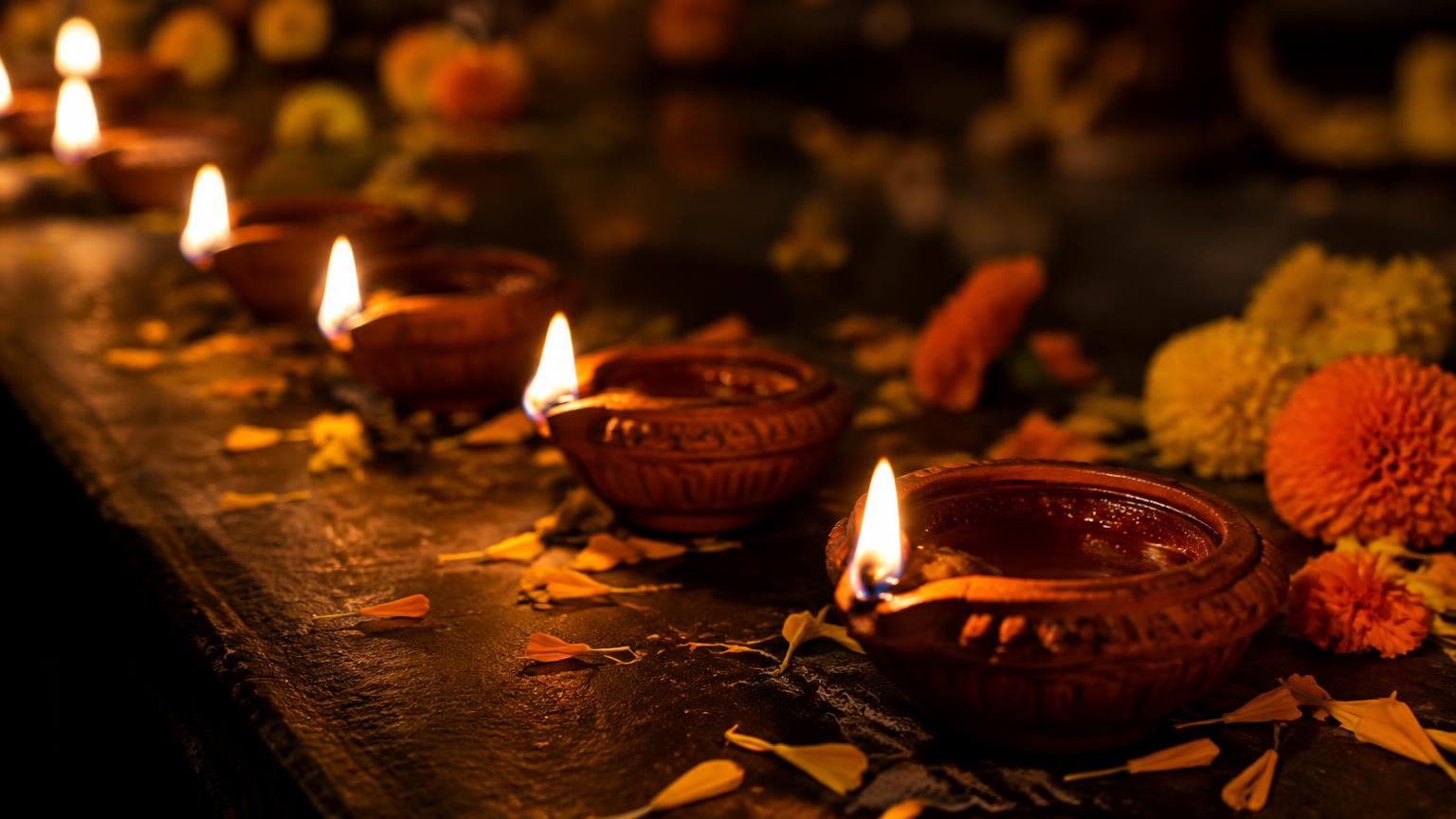
The clay oil lamp of Hindu worship: how its flame is observed with respect for deepam tradition.
The diya, or deepam, is a small clay lamp filled with ghee or oil and lit with a cotton wick. In Hindu practice it represents the light of knowledge removing darkness. It is lit daily at home altars, at aarti, and in great numbers at Diwali and Karthigai Deepam. It is first an act of devotion, not a fortune-telling tool, and any "reading" belongs inside that respect.
What's traditionally observed
- A steady, bright flame: auspiciousness and a calm atmosphere.
- A flame that goes out quickly: often taken simply as a cue to relight with care, sometimes as a sign to pause and pray.
- Flame direction: some households prefer the wick facing east or north, and note which way the flame leans.
- Ghee or oil: each is traditionally linked with different deities and purposes. Ghee is often preferred for its clean, bright burn.
Respectful practice
Customs vary by region, family and sampradaya (lineage). Follow your household's or temple's guidance first. LumenOracle notes traditional readings gently and never replaces your family's practice. See for more context.
Complete reading, start to end
Follow all three stages in order. The middle stage is specific to this type of reading.
Stage 1 · Before you light
- 01Choose a quiet time when you can stay with the candle for the whole burn.
- 02Clear a stable, heat-proof surface away from curtains, shelves, pets, children and drafts.
- 03Gather what you need: candle, holder or dish, lighter, snuffer, water nearby, and a notebook or phone.
- 04Trim the wick to about 5 mm and wipe away dust or loose wax.
- 05If you dress the candle, use only skin-safe, diluted oils and a light touch of dried herbs.
- 06Ground yourself with a few slow breaths and notice how you feel right now.
- 07Write your intention or question in one clear sentence.
Stage 2 · During the reading
- 08Clean the diya and place it on a metal plate or tray.
- 09Fill with ghee or oil, leaving space at the rim; place a soaked cotton wick.
- 10Light it with a prayer or intention, according to your custom.
- 11Observe the flame calmly; relight gently if it goes out.
- 12Let it burn out safely, or extinguish it with a flower or snuffer as your custom allows.
Stage 3 · Closing and reflecting
- 13Extinguish the flame with a snuffer or by dipping the wick, not by blowing, if your tradition prefers.
- 14Let the candle and any wax cool completely before touching or moving it.
- 15Photograph what remains from the same angle you used during the burn.
- 16Write down what you saw, the physical conditions (drafts, candle type, wick length) and the time.
- 17Note one symbolic meaning and one physical explanation for each main sign.
- 18Record how you feel now compared with before, and one small next step you choose.
- 19Dispose of wax and remains respectfully and safely, following your tradition if it has a custom.
- 20Revisit your notes in a few days or weeks to see what still feels true.
Do
- Place diyas on a metal plate, away from flowers, cloth and paper.
- Follow your family's or temple's customs over any general guide.
- Use pure ghee or a suitable oil, with a wick sized to the lamp.
- Keep oil lamps out of reach of children and pets during festivals.
Don't
- Don't overfill; oil can overflow and spread the flame.
- Don't place diyas near curtains, rangoli powder piles or firecrackers.
- Don't treat a sacred lamp as a novelty, or mix it carelessly with other practices.
- Don't leave lamps burning on balconies or windowsills unattended.
Further reading & sources
Starting points for exploring these traditions. Community elders and teachers remain the best guides to living practice.
- Diya (lamp) · Wikipedia
- Aarti · Wikipedia, lamp offering in Hindu worship
- Diwali · Encyclopaedia Britannica
- Candle safety · National Fire Protection Association