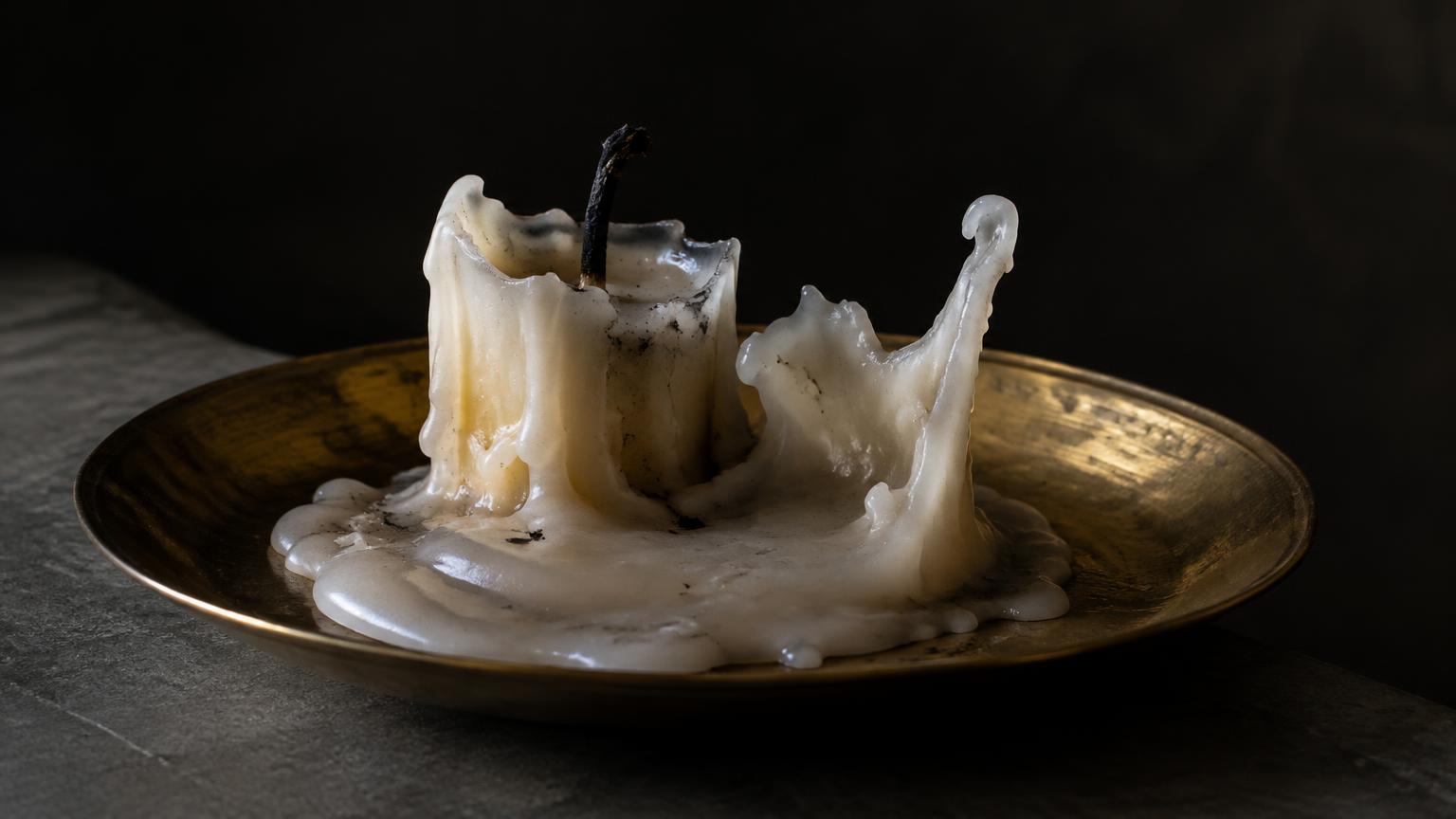
Once the flame is out, the remaining wax, wick and soot tell the end of the story.
Remnant reading looks at what's left once a candle has finished burning: the shape of the pooled wax, the state of the wick, any soot, and how much candle remains. Many practitioners treat it as the closing chapter of a working. It tells you how the energy "settled."
What to read
- A clean burn with little left: completion; the intention was fully released.
- A large, uneven puddle: lingering matters, or emotions to process.
- A tall wall or shell left standing: protection, or something still unresolved.
- Shapes in the puddle: read these like any .
- Charred herbs or debris: in some traditions, heavy burning of dressings points to an issue being "burned through."
Physical reasons
How much remains depends on wick size, the candle's diameter, wax blend and drafts. A remnant photographed and dated becomes powerful in your journal over time. You can compare across readings with the same candle type.
Complete reading, start to end
Follow all three stages in order. The middle stage is specific to this type of reading.
Stage 1 · Before you light
- 01Choose a quiet time when you can stay with the candle for the whole burn.
- 02Clear a stable, heat-proof surface away from curtains, shelves, pets, children and drafts.
- 03Gather what you need: candle, holder or dish, lighter, snuffer, water nearby, and a notebook or phone.
- 04Trim the wick to about 5 mm and wipe away dust or loose wax.
- 05If you dress the candle, use only skin-safe, diluted oils and a light touch of dried herbs.
- 06Ground yourself with a few slow breaths and notice how you feel right now.
- 07Write your intention or question in one clear sentence.
Stage 2 · During the reading
- 08Let the remnant cool completely before touching it.
- 09Photograph it from the top and from the side.
- 10Note the shapes, soot and debris, and how much wax remains.
- 11Record the reading alongside the original intention.
- 12Dispose of it respectfully according to your tradition or in household trash.
Stage 3 · Closing and reflecting
- 13Extinguish the flame with a snuffer or by dipping the wick, not by blowing, if your tradition prefers.
- 14Let the candle and any wax cool completely before touching or moving it.
- 15Photograph what remains from the same angle you used during the burn.
- 16Write down what you saw, the physical conditions (drafts, candle type, wick length) and the time.
- 17Note one symbolic meaning and one physical explanation for each main sign.
- 18Record how you feel now compared with before, and one small next step you choose.
- 19Dispose of wax and remains respectfully and safely, following your tradition if it has a custom.
- 20Revisit your notes in a few days or weeks to see what still feels true.
Do
- Wait until it's fully cool and solid before handling.
- Photograph the remnant to compare over time.
- Note candle type and size, since they strongly affect remnants.
- Dispose of remnants respectfully and safely.
Don't
- Don't relight a tiny remnant in a holder not designed for it.
- Don't scrape hot wax off surfaces; let it cool first.
- Don't assume an 'incomplete' remnant means failure; check the wick and drafts.
- Don't dispose of wax in drains or near open flames.
Further reading & sources
Starting points for exploring these traditions. Community elders and teachers remain the best guides to living practice.
- Ceromancy · Wikipedia overview with further references
- Hoodoo (spirituality) · Wikipedia, African American folk tradition
- Divination · Encyclopaedia Britannica
- Candle safety · National Fire Protection Association