Crown Chakra — सहस्रार
Crown Chakra (Sahasrara): Silence & Om Mantra & Meditation Guide
By LumenOracle Editors · 10/19/2026 · 4 min read · Chakra Healing
Meaning of Sahasrara (सहस्रार), its practice of silence and Om, a step-by-step chanting method, candle practice and a gentle beginner routine — explained as tradition, not medicine.
हिंदी में पढ़ें:
Crown Chakra at a glance
Tradition, not anatomy. Chakras come from Indian yogic and tantric traditions. Colours, body links and "blockages" are spiritual and symbolic ideas, not scientifically established anatomy. Many modern associations (for example the rainbow colours) are recent Western additions. This practice is for reflection and relaxation — it does not diagnose, treat or cure anything. See a doctor for health concerns.
What the Crown Chakra represents
In traditional teaching, Sahasrara ('thousand-petalled') sits at the top of the head (often described as just above it) and is linked with the beyond the elements in most traditions element. Modern teachers often connect it with stillness, connection and contemplation. Treat these as invitations to reflect, not as facts about your body.
The mantra: silence, or ॐ (Om) in some traditions
Pronunciation: if you use Om: a-u-m, then let it fade into silence.
Sanskrit pronunciation varies by lineage and teacher, and no English spelling captures the original sounds perfectly. Chant gently and naturally — sincerity matters more than perfection. The crown has no single universally accepted bija mantra: many traditions emphasise silent meditation here, while others use Om.
Preparation and posture
- Choose a quiet place where you won't be disturbed for 10 minutes.
- Sit on a chair or cushion with a relaxed, upright spine; hands resting on your thighs.
- Close your eyes or keep a soft, lowered gaze.
- Take a few natural, unforced breaths.
Breathing
Breathe through the nose if comfortable. Let the exhale be slightly longer than the inhale — for example in for 4, out for 6. Never strain or hold your breath. If you feel dizzy, return to normal breathing.
Step-by-step chanting method
- Settle into your posture and notice the space at the top of your head.
- Breathe naturally — no holding or forcing.
- Silent version: simply rest attention in the quiet after each out-breath for 3–5 minutes.
- Om version (used in some traditions): on a few exhales, chant ॐ softly and let each sound fade into silence.
- Notice any thoughts, then let them pass like clouds.
- Sit quietly for one or two minutes.
- Finish by noticing your hands, feet and the room before you get up.
Guided visualisation
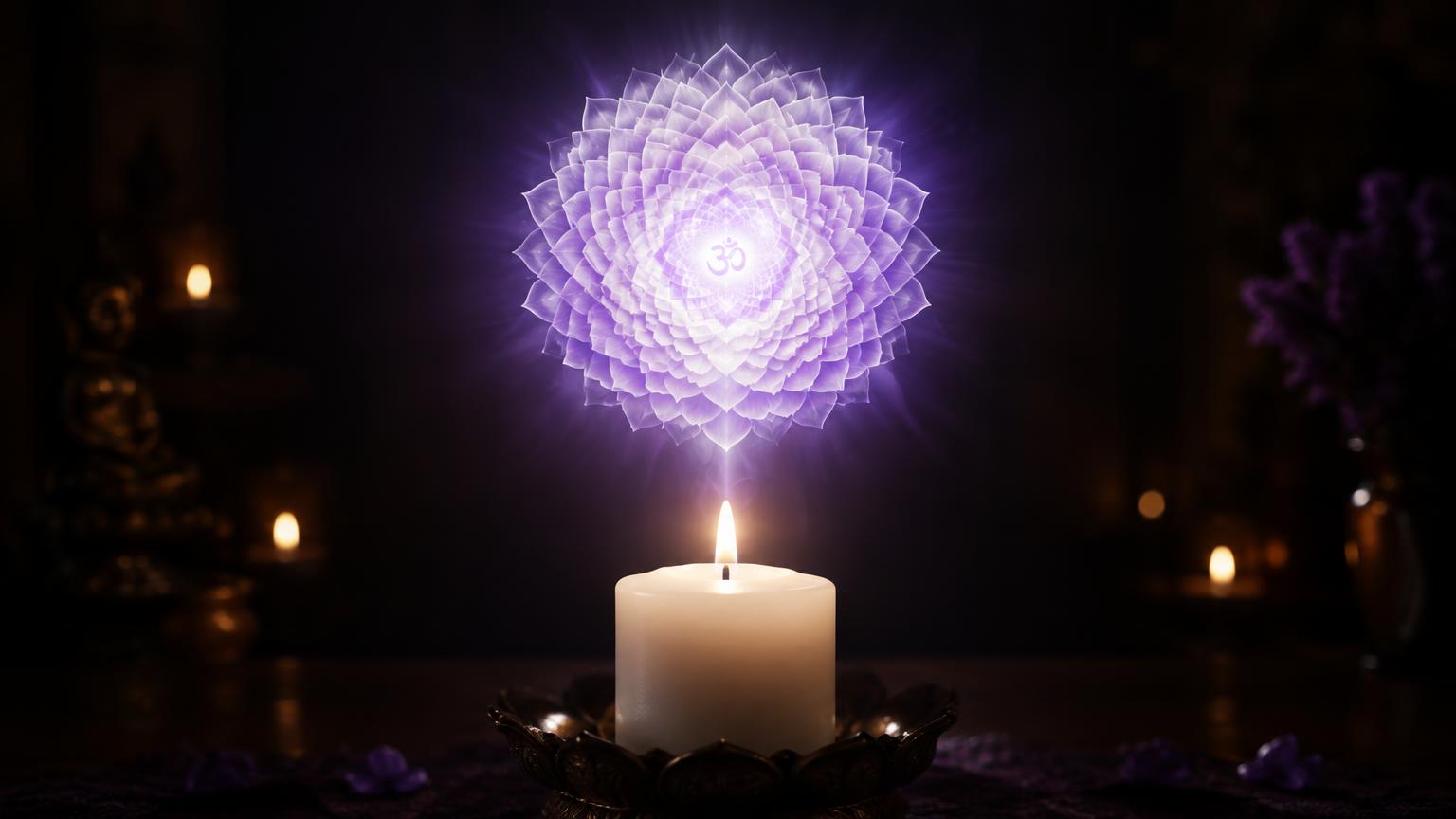
With eyes closed, imagine soft white-violet light like an opening lotus above your head, then simply rest in quiet. If imagining colour feels hard, simply feel the breath at the top of the head (often described as just above it). Stay for a few breaths, then let the image go.
Candle practice for this chakra
Many people like to start with a candle. Traditionally, a white or violet candle is used.
- Place the candle on a stable, heat-proof surface about an arm's length away, at eye level, away from curtains and drafts.
- Gaze softly at the flame for 30–60 seconds (a gentle form of trataka), blinking whenever you need to.
- Close your eyes and notice the after-image, then begin your chant.
- Afterward you can note how the flame behaved. A steady flame, flicker or soot has physical causes first (drafts, wick length, wax) — any symbolic meaning is only for reflection. Learn more in our and , or .
Safety: never leave a flame unattended, keep it away from children and pets, and skip candle gazing if you have epilepsy, eye conditions or migraines. See the .
Beginner routine
This is a flexible example, not a spiritual prescription. No number of chants guarantees healing, removes karma or "activates" a chakra.
Affirmations
- I can rest in stillness.
- I am part of something larger than my worries.
Reflection questions
- When do I feel most at peace?
- What remains when I stop trying to fix everything?
Gentle movements (with safety modifications)
Move slowly and stop if anything hurts. If you are pregnant, injured or have a medical condition, check with a qualified teacher or doctor first.
Common mistakes and tips
- Forcing the sound or breath — keep it soft; a whisper is fine.
- Expecting a special sensation — calm or nothing at all are both normal.
- Practising when rushed — a short, relaxed session beats a long, tense one.
- Using it instead of help — for ongoing anxiety, pain or low mood, please talk to a professional.
Continue the journey
- Previous:
Questions & answers
Is the Crown Chakra real?
Chakras are a spiritual and symbolic framework from Indian traditions. They are not recognised structures in modern anatomy; many people still find the practice useful for relaxation and reflection.
What is the mantra for the Crown Chakra?
There is no single universally accepted bija mantra. Many traditions use silent meditation; some use Om.
How long should I practise?
Start with 5 rounds or a few minutes and increase only if it feels comfortable. Consistency matters more than length.
Can this cure illness?
No. Chakra meditation is a reflective and relaxation practice, not a medical treatment. Please see a doctor for health concerns.
#chakra#crown-chakra#sahasrara#mantra#meditation#remedy