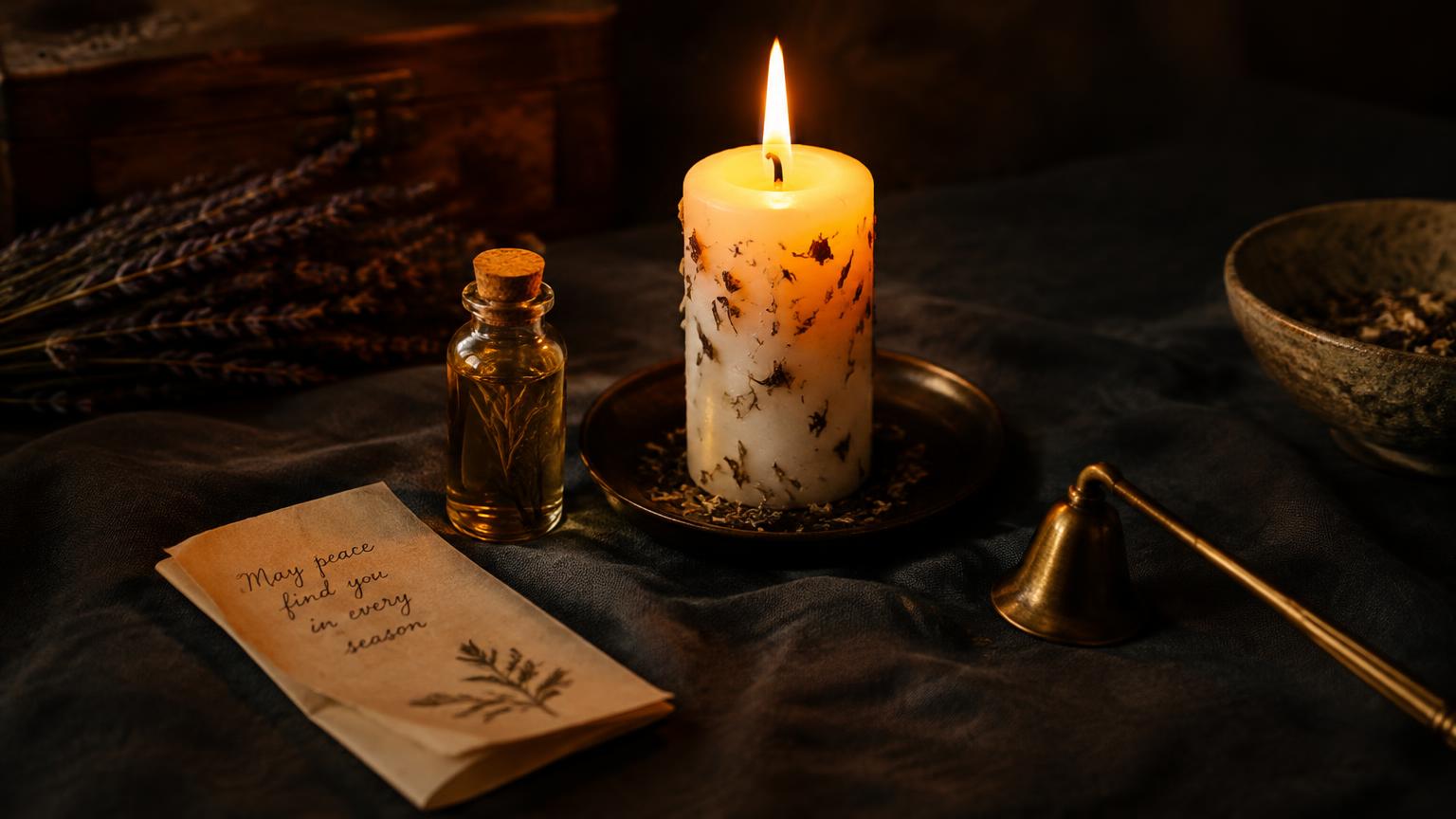
Building a safe, meaningful candle ritual, from choosing materials to closing the working.
A candle ritual is a structured practice built around an intention. You choose a candle, maybe dress it with oil or herbs, maybe inscribe it, then light it with focus and reflect while it burns. Some rituals take one evening; others run several nights. Reading the flame and wax becomes part of the practice.
Building blocks
- Intention: be specific and kind. See for ideas, with suggested colors, days and moon phases.
- Candle: choose its type and color to match (, ).
- Dressing: oils and herbs carry correspondences. Always check the , because some essential oils irritate skin and some herbs flare in a flame.
- Timing: a or weekday can add symbolism, but it's optional.
- Closing: snuff the candle with gratitude, journal, and dispose of the remains respectfully.
Ethics
Rituals for protection, healing, clarity, love of self and others, and letting go of habits are welcome. Rituals meant to curse or control a named person are not. LumenOracle redirects to protective or boundary-setting alternatives instead.
Complete reading, start to end
Follow all three stages in order. The middle stage is specific to this type of reading.
Stage 1 · Before you light
- 01Choose a quiet time when you can stay with the candle for the whole burn.
- 02Clear a stable, heat-proof surface away from curtains, shelves, pets, children and drafts.
- 03Gather what you need: candle, holder or dish, lighter, snuffer, water nearby, and a notebook or phone.
- 04Trim the wick to about 5 mm and wipe away dust or loose wax.
- 05If you dress the candle, use only skin-safe, diluted oils and a light touch of dried herbs.
- 06Ground yourself with a few slow breaths and notice how you feel right now.
- 07Write your intention or question in one clear sentence.
Stage 2 · During the reading
- 08Write your intention in one clear, positive sentence.
- 09Gather the candle, holder, snuffer and any dressings; check their safety notes.
- 10Dress the candle sparingly with diluted oil, away from the wick.
- 11Light it, speak your intention, and sit with the flame.
- 12Close by snuffing, journaling, and safely disposing of the remains.
Stage 3 · Closing and reflecting
- 13Extinguish the flame with a snuffer or by dipping the wick, not by blowing, if your tradition prefers.
- 14Let the candle and any wax cool completely before touching or moving it.
- 15Photograph what remains from the same angle you used during the burn.
- 16Write down what you saw, the physical conditions (drafts, candle type, wick length) and the time.
- 17Note one symbolic meaning and one physical explanation for each main sign.
- 18Record how you feel now compared with before, and one small next step you choose.
- 19Dispose of wax and remains respectfully and safely, following your tradition if it has a custom.
- 20Revisit your notes in a few days or weeks to see what still feels true.
Do
- Dilute essential oils and patch-test them before they touch skin.
- Apply dressings sparingly, and keep loose herbs away from the wick.
- Prepare a heat-proof holder and a snuffer before you begin.
- Close the ritual intentionally and record your reflections.
Don't
- Don't roll a candle heavily in herbs or glitter; it can flare dangerously.
- Don't use oils marked not skin-safe directly on skin.
- Don't perform rituals intended to harm, bind or control someone.
- Don't treat a ritual as a substitute for medical, legal or financial help.
Further reading & sources
Starting points for exploring these traditions. Community elders and teachers remain the best guides to living practice.
- Hoodoo (spirituality) · Wikipedia, African American folk tradition
- Essential oil: safety and toxicity · Wikipedia
- Candle: history and religious use · Wikipedia
- Candle safety · National Fire Protection Association