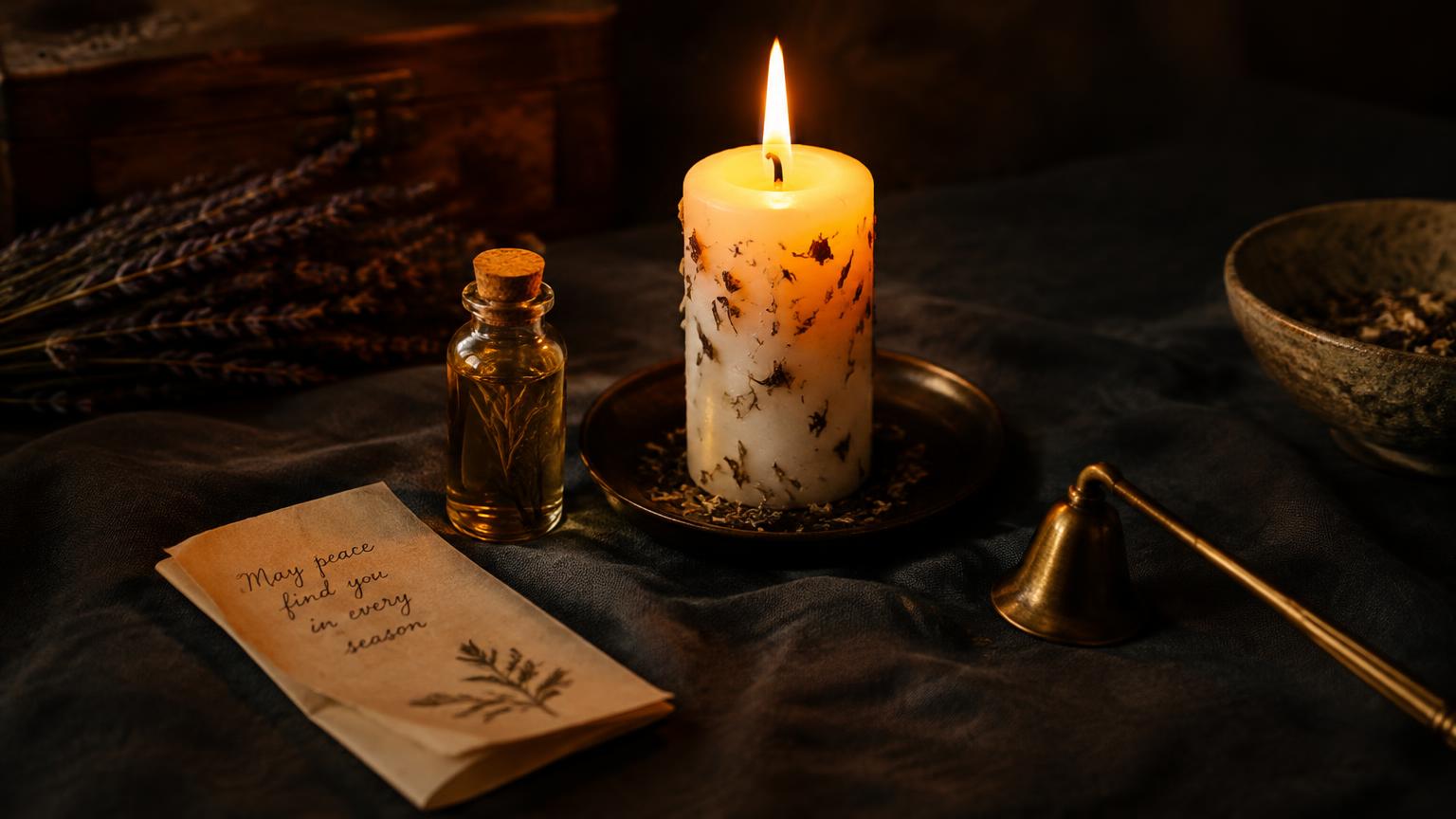
Every stage of a candle reading in one place: choosing a time, setting up safely, lighting, observing, interpreting, closing and reflecting.
If you're new to candle reading, start here. Each type of reading (flame, wax drip, wax in water, jar, diya, remnant, multiple candles, ritual) has its own signs, but they all follow the same journey.
The five stages
- Prepare: choose a time, make the space safe, gather tools, set an intention.
- Light: begin calmly, with the candle where you can see it clearly.
- Observe: watch over time and take notes, physical conditions included.
- Interpret: for every sign, give both a symbolic meaning and a physical explanation. The pairs them for you.
- Close and reflect: extinguish safely, record how you feel, and revisit later.
Readings are for reflection and self-understanding. They are not predictions and never replace medical, legal or financial help.
Complete reading, start to end
Follow all three stages in order. The middle stage is specific to this type of reading.
Stage 1 · Before you light
- 01Choose a quiet time when you can stay with the candle for the whole burn.
- 02Clear a stable, heat-proof surface away from curtains, shelves, pets, children and drafts.
- 03Gather what you need: candle, holder or dish, lighter, snuffer, water nearby, and a notebook or phone.
- 04Trim the wick to about 5 mm and wipe away dust or loose wax.
- 05If you dress the candle, use only skin-safe, diluted oils and a light touch of dried herbs.
- 06Ground yourself with a few slow breaths and notice how you feel right now.
- 07Write your intention or question in one clear sentence.
Stage 2 · During the reading
- 08Sit facing the candle and say or read your intention aloud.
- 09Light the candle and let the flame settle for a minute or two.
- 10Start a timer and watch the flame: its height, color, movement and smoke.
- 11Watch the wax: drips, pools, shapes, and which side they form on.
- 12Every few minutes, note what changed and at what time.
- 13Before reading a sign, rule out a physical cause (draft, long wick, uneven surface).
- 14Look up each sign's symbolic meaning in the Library and note what resonates.
- 15Stay with the candle the whole time; extinguish it if you need to leave.
Stage 3 · Closing and reflecting
- 16Extinguish the flame with a snuffer or by dipping the wick, not by blowing, if your tradition prefers.
- 17Let the candle and any wax cool completely before touching or moving it.
- 18Photograph what remains from the same angle you used during the burn.
- 19Write down what you saw, the physical conditions (drafts, candle type, wick length) and the time.
- 20Note one symbolic meaning and one physical explanation for each main sign.
- 21Record how you feel now compared with before, and one small next step you choose.
- 22Dispose of wax and remains respectfully and safely, following your tradition if it has a custom.
- 23Revisit your notes in a few days or weeks to see what still feels true.
Do
- Keep the whole reading within one calm, uninterrupted session.
- Note both meaning and physical cause for every sign.
- Keep a snuffer and water within reach.
- Follow your own tradition's customs where they differ.
Don't
- Don't leave a flame unattended, even briefly.
- Don't read a single moment as a final answer.
- Don't use readings for medical, legal or financial decisions.
- Don't perform rituals meant to harm or control another person.
Further reading & sources
Starting points for exploring these traditions. Community elders and teachers remain the best guides to living practice.
- Ceromancy · Wikipedia overview with further references
- Divination · Encyclopaedia Britannica
- Candle safety · National Fire Protection Association